Chapter 1: What Is a Container Chassis Trailer for Sale in Papua New Guinea?
Chapter 2: TITAN Skeletal Trailer Sizes & Configurations for PNG
Chapter 3: TITAN Skeleton Trailer Load Capacity for PNG
Chapter 4: Skel Trailer Applications in Papua New Guinea
Chapter 5: Container Trailer Price Guide for PNG
Chapter 6: Container Chassis Trailer Maintenance Tips
1.1 Definition & Local Industry Aliases
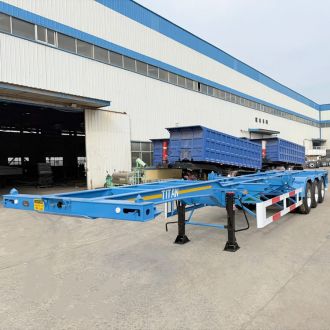
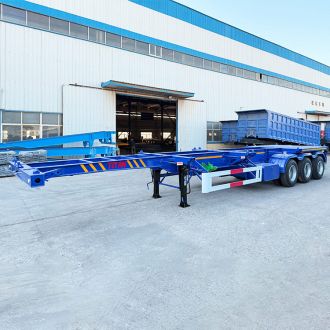
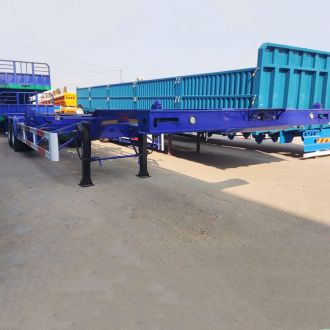
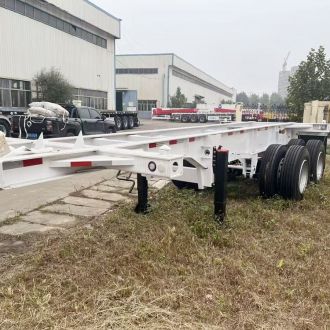
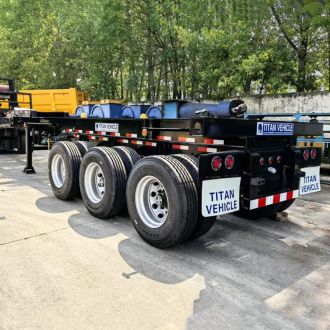
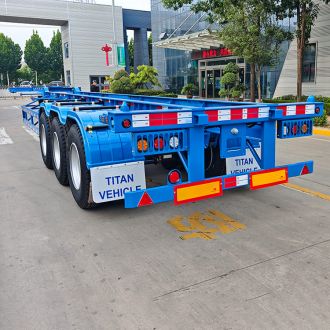
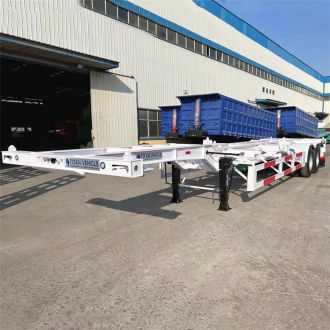
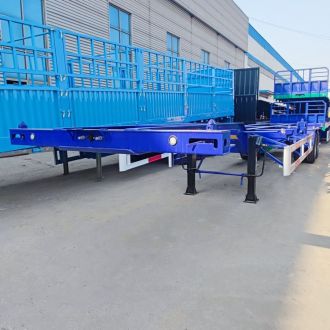
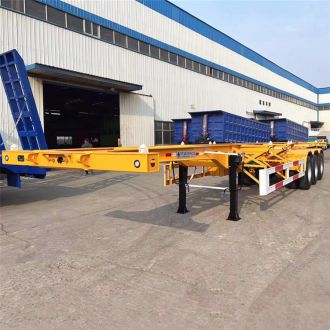
A container chassis trailer is a purpose-built semi-trailer frame engineered exclusively to mount, lock and transport ISO standard shipping containers. Within PNG logistics circles, this equipment is also referenced as skeletal trailer, skeleton trailer or skel trailer, while general buyers and freight forwarders often broadly call it a container trailer.
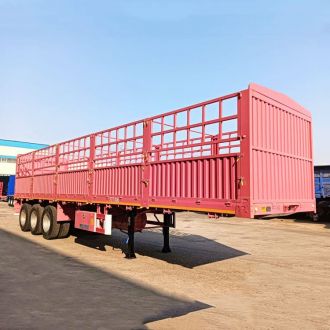
Unlike solid-deck flatbed semi-trailers built to carry mixed, loose, oversize cargo, this open lattice frame design removes the full steel deck. This structural choice cuts tare weight substantially. Reduced empty weight directly lifts legal payload capacity and lowers diesel burn for every haul, which is a major financial advantage for PNG fleets operating under tight fuel budgets.
Every TITAN skel trailer is designed around ISO container corner castings, the standard locking points on all shipping containers. Instead of straps or chains alone, the chassis relies on mechanical twist locks to hold containers fixed in position. This locking principle separates it from many other semi-trailer types used for general freight.
1.2 Core Function Within PNG’s Supply Chain
As an island trading economy, Papua New Guinea relies almost entirely on seaborne imports and exports to sustain domestic consumption, mining projects, construction work and agricultural commodity exports. Port Moresby and Lae serve as the nation’s two primary logistics hubs. Nearly all containerised cargo entering or leaving PNG flows through these two ports before moving inland.
Intermodal transport and inland container haulage form the backbone of national distribution. Many regional roads are unsealed, with frequent potholes, steep gradients, loose gravel and uneven road surfaces. These harsh road conditions place unique stress on every container haulage asset.
Fitted with precision twist locks, this intermodal chassis anchors container corner castings securely. The locking system prevents shifting, sliding or tipping while travelling over PNG’s rough, potholed highways and uneven yard surfaces. Without a reliable chassis, container movement slows down at terminals and on rural routes, creating bottlenecks, demurrage fees and costly cargo delays for importers, exporters and mine operators.
1.3 Key Structural Features of TITAN Container Frames
- Lightweight High-Strength Main Frame
Fabricated from Q345 / Q355 high-tensile structural steel. The design balances rigid load resistance with low unladen mass to maximise legal payload and reduce running costs. Professional submerged arc welding and stress relief treatment are applied across all main beam joints, minimising cracking risks under repeated shock loads from bumpy PNG roads.
- Adjustable Twist Lock System
Lock points are pre-positioned across the beam to support flexible stowage for 20ft, 40ft and 45ft ISO containers. Fixed and sliding twist lock combinations are available, so operators can reconfigure the chassis quickly to match different cargo plans without yard modification.
- Heavy-Duty Axles & Suspension
13-ton or 16-ton rated axles are standard. Operators select reinforced mechanical suspension or air suspension to cope with poor road conditions and long overland runs. Mechanical suspension is low-cost and easy to repair at remote workshops, while air suspension delivers smoother container rides and better cargo protection for fragile or high-value goods.
- Port Interoperability
The open frame works seamlessly with quay cranes, reach stackers, yard ramps and container handlers common at PNG ports. Fast lift-on / lift-off cuts terminal dwell time and speeds up the whole supply chain. There are no deck plates to block crane access, so terminal crews can cycle containers faster during busy vessel discharge windows.
- Standard Road Safety Package
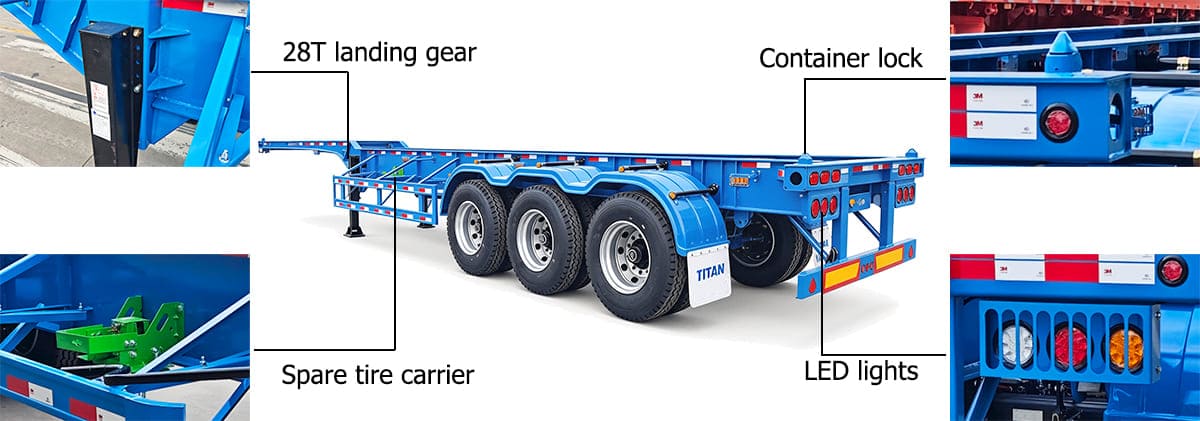
Each chassis is built with road safety hardware including ABS brake systems, reflective markings, LED tail, brake and marker lights, heavy-duty landing legs and side guards. These components help fleets meet PNG local road safety inspection requirements and reduce accident risks during night-time inland transport.
2.1 Overview of Frame Options
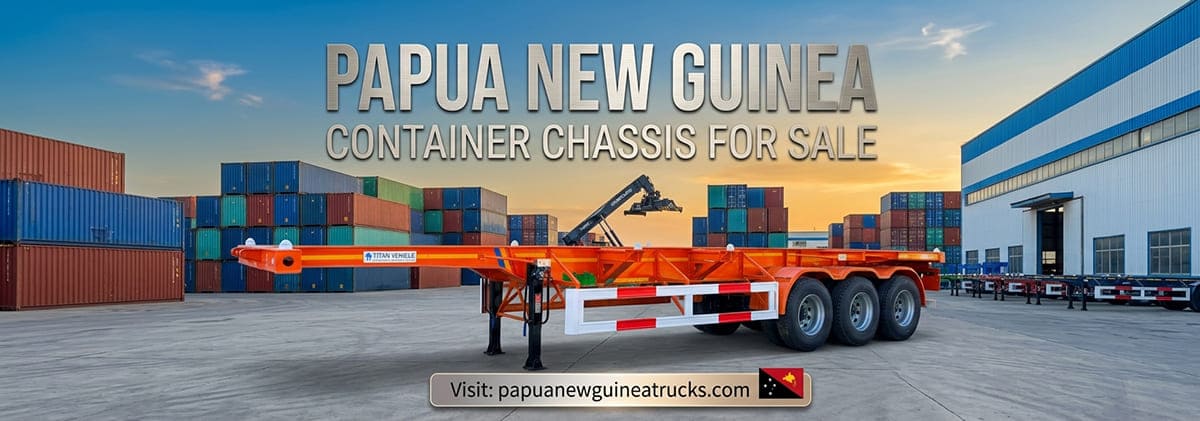
No single layout suits every fleet or job in Papua New Guinea. Frame length, gooseneck geometry, twist lock spacing, axle quantity and suspension type are customised to match container dimensions, national weight regulations, terminal space constraints and job types across PNG. Some operators only run short port shunting work, while others run multi-day overland trips to remote highland mining camps. Each application calls for a different chassis specification.
2.2 TITAN Standard Straight Frame Units
| Model | Suitable Container | Overall Dimension | Main Application in PNG |
| 20ft Skel Trailer | Single 20ft container | 7,500 mm × 2,500 mm × 1,550 mm | Port shunting, urban delivery, small freight fleets |
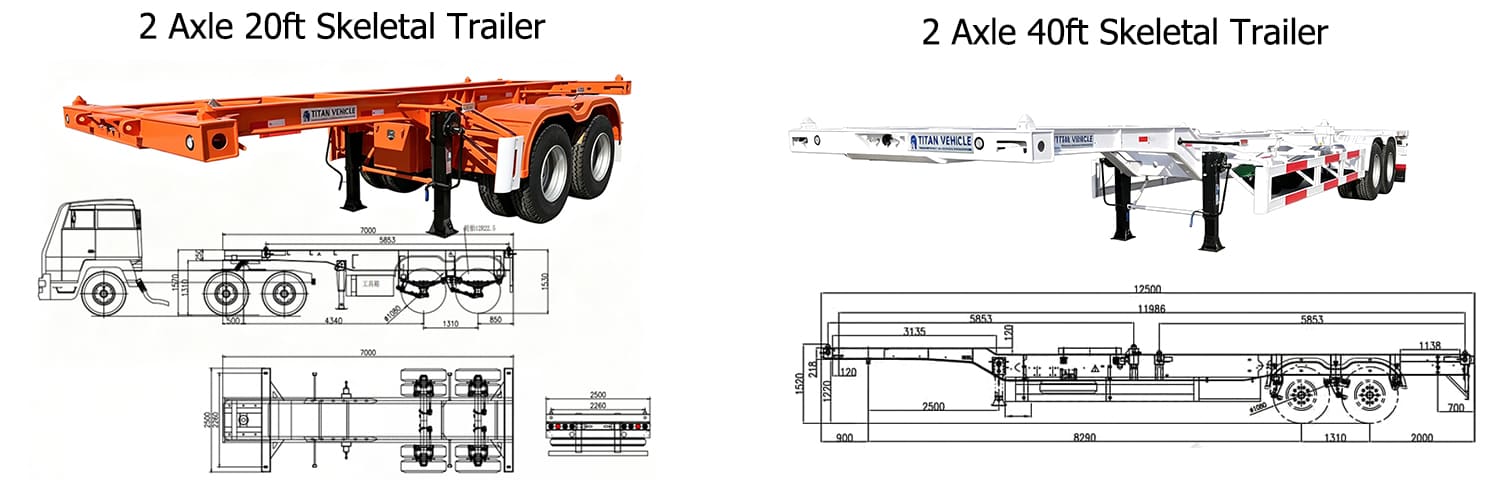
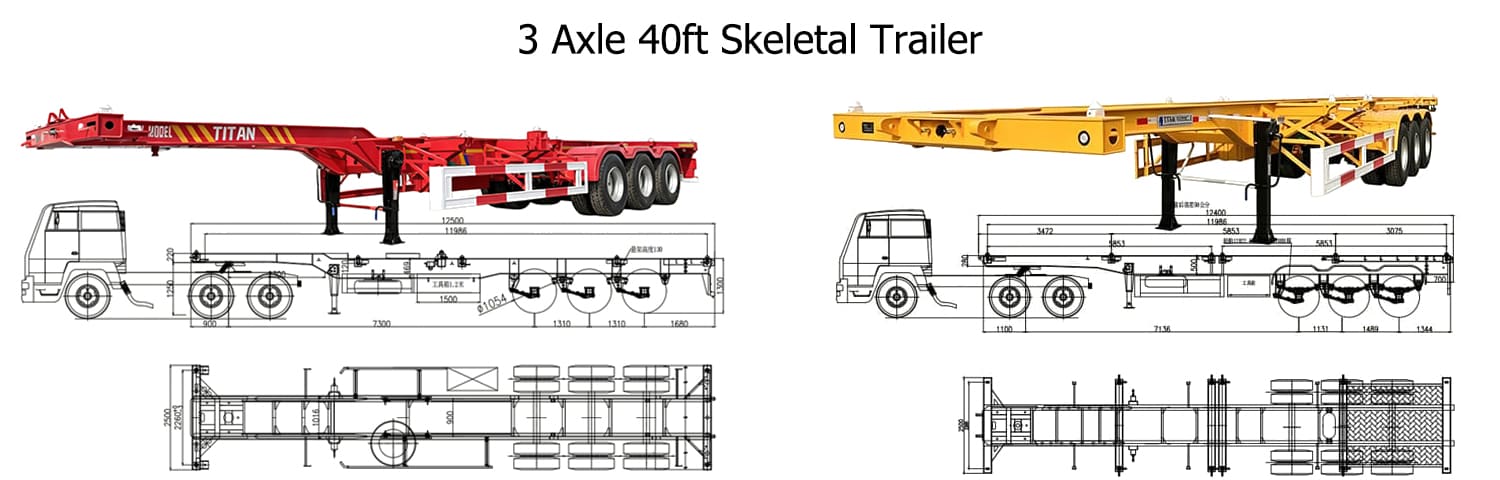
| 40ft Skeleton Trailer | 1×40ft / 2×20ft containers | 12,500 mm × 2,500 mm × 1,530 mm | Mainstream long-haul, mixed import & export cargo |
| 45ft Container Trailer | Single 45ft high cube container | Custom lengthened frame | Regional high-volume export, oversize packaged equipment |
• 20ft Skel Trailer
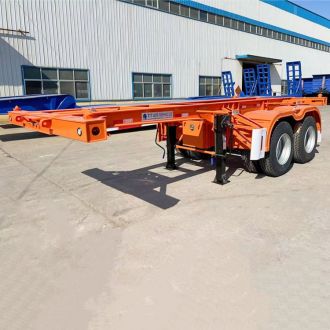
Built for single 20ft ISO dry van or reefer containers. Its compact footprint delivers excellent manoeuvrability inside tight port yards, narrow city access roads and congested urban logistics zones. This model is the first choice for terminal shunting, local city delivery and small freight companies that mostly handle 20ft import consignments.
Dimensions: Approx. 7,500 mm × 2,500 mm × 1,550 mm
• 40ft Skeleton Trailer
The highest-demand variant in PNG. It carries one full 40ft box or two separate 20ft containers, supported by 12 built-in twist locks. The flexible dual-use design makes it extremely popular with freight companies that handle mixed 20ft and 40ft import and export cargo. Most medium and large haulage fleets around Port Moresby and Lae keep multiple units of this specification.
Dimensions: Approx. 12,500 mm × 2,500 mm × 1,530 mm
• 45ft Container Trailer
A lengthened container trailer made for regional hubs that move 45ft high-cube containers on long-distance trunk routes. 45ft containers are mostly used for high-volume export cargo and oversized packaged equipment. This chassis is less common than the 40ft version, ideal for specialist export operators with dedicated long-haul routes.
When picking a skeletal trailer for daily work, PNG hauliers also need to think about terminal yard space and prime mover compatibility. Compact 20ft container trailers are easier to manoeuvre in crowded stacking areas, while the versatile 40ft version remains the most popular choice for mixed container cargo. If your fleet regularly handles high-volume export shipments, the extended frame design can be a practical upgrade. Every skeletal trailer from TITAN is built with twist lock positions aligned to ISO standards, so it can lock containers firmly without unsafe shifting on bumpy inland roads.
2.3 Gooseneck Variant
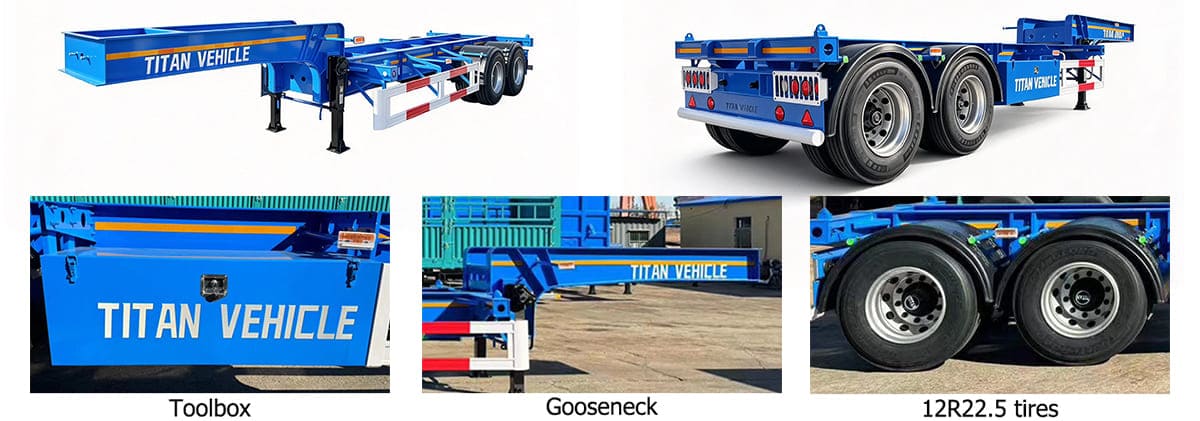
The dropped gooseneck front section lowers the overall height of stacked high-cube containers. This improves clearance beneath bridges and overhead utility lines, a critical advantage on PNG’s constrained rural corridors where overhead cables and low bridge structures are common. High-cube containers have extra vertical height, and standard straight chassis can hit clearance limits on inland routes, so the gooseneck design solves this specific pain point for PNG hauliers.
2.4 Choosing Between Straight Frame and Gooseneck Chassis
Straight frame models are simpler, cheaper to maintain and easier to repair in remote workshops. They work perfectly for port shunting and routes with reliable overhead clearance. Dropped gooseneck chassis add height clearance but come with slightly higher purchase cost and more complex front frame structure. Most fleets buy a mix: straight chassis for terminal work, gooseneck skeletal trailers for inland high-cube container runs.
3.1 What Decides Safe Gross Load?
Maximum carrying capacity depends on main beam steel thickness, suspension rating and axle layout. Heavy-duty frames built for PNG range from 30 tons up to 70 tons rated load. It is critical for buyers to match rated capacity to local road weight limits. Overloading is a serious risk in PNG: it accelerates axle failure, breaks suspension parts on gravel roads, causes container instability and can lead to heavy fines from road inspection authorities.
3.2 Capacity by Axle Setup
|
Axle Configuration |
Rated Payload |
Best Use Scenario |
|
2 Axle Container Chassis Trailer for Sale |
40 – 50 Tons |
20ft container short haul, terminal shunting, local delivery |
|
3 Axle Container Chassis Trailer for Sale |
50 – 60 Tons |
40ft container long-distance inland haulage, most popular for PNG fleets |
|
4 Axle Container Chassis Trailer for Sale |
60 – 80 Tons |
Mining freight, heavy construction cargo, remote project supply |
• 2-Axle Container Chassis Trailer for Sale (40 – 50 Tons)
Ideal for 20ft box short-haul delivery, common for local port shunting, city distribution and small-scale operators. Lower initial cost and lighter tare weight make it easy to pair with standard prime movers. It is not recommended for long-distance runs over rough highland roads with heavy payloads.
• 3-Axle Container Chassis Trailer for Sale (50 – 60 Tons)
The mainstream 40ft chassis for long-distance inland runs, optimised for balanced weight distribution. This is the sweet spot for most PNG haulage businesses. It balances payload, spare part availability, repair simplicity and road compliance. For trips from Lae or Port Moresby into inland provinces, this remains the most widely trusted configuration.
• 4-Axle Container Chassis Trailer for Sale (60 – 80 Tons)
Specified for high-weight cargo. Extra axles spread axle loads to comply with local road weight limits. Mining supply chains and large project freight firms favour this version, as they often move heavy containerised plant, generators and construction materials deep into remote sites. The extra axle reduces point pressure on weak, unsealed roads.
Important Note on Rated Payload

All capacity figures are design ratings subject to PNG national road transport rules. Local axle load limits must always be checked before loading. Even if the chassis is built for heavy loads, overloading can result in vehicle seizure, cargo delays and permanent damage to the frame and running gear.
4.1 Port & Terminal Shunting
These container haulage skeletal trailers move boxes between vessels, quay cranes, stacking yards and customs inspection zones at Port Moresby and Lae ports. Terminal operators rely on fast chassis rotation to keep up with vessel schedules. Slow chassis turnaround creates vessel waiting time and expensive port demurrage, so reliable, low-failure chassis directly improve terminal productivity.
4.2 Intermodal Import & Export Movement
They create seamless handoff between ocean vessels, port storage and inland warehouses, linking maritime freight to final land destinations. Imported consumer goods, building materials, machinery, food supplies and industrial parts all travel inside ISO containers. Without this intermodal equipment, cargo cannot efficiently transfer from ship to inland depots.
4.3 Mining & Remote Infrastructure Logistics
Containerised plant equipment, spare parts, fuel tank packages, camp accommodation modules and construction supplies travel to remote mine and construction sites via these robust haulage frames. Many mine sites are hundreds of kilometres from the main ports, on roads with limited workshop support. For this reason, chassis selected for mining logistics must use heavy-duty running gear and simple designs that local mechanics can fix without specialised tools.
4.4 Agricultural Commodity Export
Coffee, cocoa, palm oil, copra and other bulk raw goods packed inside ISO containers are transported from regional collection hubs out to major seaports. Agricultural exporters operate on tight harvest windows. Reliable chassis fleets ensure that export containers reach the port on time to catch scheduled vessel sailings, avoiding missed shipments and lost sales for PNG commodity producers.
4.5 Humanitarian & Government Supply Transport
Government and NGO relief supplies, medical containers and school building materials also move on these frames to provincial centres. For these time-sensitive consignments, chassis durability and brake reliability are key priorities, especially during wet seasons when roads turn muddy and slippery.
Many freight contractors in PNG often compare skel trailer options before placing orders, since road conditions vary widely between sealed highways around Port Moresby and rough gravel tracks leading to highland provinces. A properly selected container trailer balances weight, strength and repair simplicity. Operators prefer models built with Q345 high-tensile steel, as this material handles constant vibration and shock loads better on bad roads. Whether for regular export runs of agricultural goods or long-term mining support tasks, the right skeletal trailer helps cut delays and stabilise haulage schedules for local logistics teams.
5.1 General Price Band
A brand-new intermodal container frame for PNG typically costs between $7,500 and $13,500 USD. Final pricing shifts based on frame length, axle count, suspension type, steel grade and custom modifications. Buyers should understand that the lowest upfront price is not always the best value; cheaper skeleton trailers with thin steel or low-grade axles often break quickly on PNG rough roads and generate high repair bills within the first year.
5.2 Popular Model Price Reference
- 2-Axle 20ft Frame: Approx. $7,500 – $8,800 USD
- 3-Axle 40ft Chassis: Approx. $9,200 – $10,800 USD
- 4-Axle Heavy-Duty Frame: Approx. $11,500 – $13,500 USD
5.3 Main Cost Drivers
- Steel grade and welding design: Q345/Q355 high-tensile construction extends service life under continuous heavy use. Thicker main beams add cost but resist bending and cracking under shock loads on gravel roads.
- Brand running gear: Premium FUWA / BPW axles, heavy landing legs, ABS braking and LED lighting packages push quotes higher. These branded components have better spare parts availability across PNG, reducing downtime. Budget no-name axles are cheaper initially but hard to service in remote provinces.
- Custom upgrades: Air suspension, automatic tyre inflation systems, bespoke gooseneck heights, reefer bracket fitments, extra corrosion protection paint and custom marker layouts tailored to fleet requirements all add to the final quotation. Anti-corrosion paint is especially valuable for PNG’s humid coastal port environment, which accelerates rust.
5.4 Additional Costs to Plan For
Buyers should budget beyond the chassis purchase price. Extra expenses include sea freight to PNG port, import duties, local inspection fees, registration, insurance and spare part stock for the fleet. Many new fleet operators overlook these add-ons and underestimate total landed cost.
Papua New Guinea’s tough operating conditions — salty coastal air at ports, seasonal heavy rain, muddy and gravel inland roads, plus limited roadside repair support in remote provinces — speed up wear and tear. Consistent routine maintenance helps avoid unexpected breakdowns, demurrage charges, frame damage and safety risks, while extending service life.
6.1 Daily Pre-Trip Inspection
Drivers should complete a quick walkaround check before every trip:
- Test all twist locks to ensure smooth locking and unlocking, clear mud and gravel from lock bases. Never travel with stuck or damaged twist locks.
- Check the main frame, welds and suspension brackets for cracks, rust or paint peeling.
- Inspect tyre pressure, sidewall cuts, wheel nuts, brake function and air system for leaks.
- Verify LED lights, reflectors, landing legs and kingpin work properly.
6.2 Regular Scheduled Servicing
- Weekly: Wash mud, gravel and salt off the undercarriage and frame, then grease twist locks and landing leg threads with water-resistant grease.
- Monthly: Check brake linings, air hoses and suspension fasteners. Touch up chipped paint to stop rust spreading.
- Every 3 months / 10,000 km: Service wheel hubs, repack bearings and replace worn seals. For air suspension, check airbags and control valves.
6.3 Component Care Tips
- Twist locks: Keep them lubricated. Do not hammer seized locks, which may cause hidden damage.
- Frame anti-corrosion: Q345/Q355 steel still rusts quickly in humid PNG weather. Clean trapped moisture from frame channels and repair paint damage promptly.
- Axles and suspension: FUWA / BPW branded axles have better spare parts availability locally. Avoid continuous overloading, which causes spring fatigue and frame cracks.
- Brake and electrics: Drain water from air tanks daily. Use dielectric grease on electrical connectors to fight salt corrosion.
6.4 Wet Season Adjustments
After driving through mud or floodwater, clean the trailer as soon as possible. Increase greasing and hub inspection frequency. Park idle units on hard, raised ground instead of wet soil. Slow down on slippery roads to reduce shock loads on the frame and suspension.
6.5 Spare Parts Planning
Since parts delivery is slow outside Port Moresby and Lae, maintain a basic stock: twist locks, brake shoes, seals, LED lights and touch-up paint. Standardise your fleet to one axle brand to simplify spare part management. Prepare emergency small kits for trailers heading to mining and remote sites.